
Doctor and Patient Reports on Hay Fever
A woman reported, It is great. It is the best thing that has ever come out. ... (It) stopped my hay fever and my energy is up.
A 59-year-old man, who'd been diagnosed with severe allergies as a teen-ager, reported that he has been taking antihistamines for over 45 years, using both oral tablets daily and steroid nasal sprays at various times during high pollen and mold seasons. After six months on Integra CF, he reports that his allergies are alleviated to the point that he has not taken any prescription drugs in those months. "It's really quite incredible," he reports, "that after so many years, I could drop them all and have the same protection against all that pollen and mold that I'd used prescriptions for. Who knows what the steroids had been doing to my body? I even survived the ragweed season."
Data on Allergies
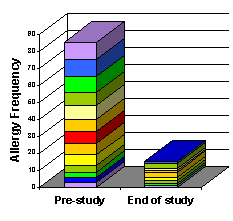
Twenty one people with at least moderate allergies took low doses of Taurox every day for several weeks. The higher dose was not tested. Some had little benefit. 62% of the participants (13 of 21) reported a significant decrease in allergic symptoms. The "average" patient had a 63% decrease in frequency of allergic symptoms; this was statistically significant (p < 0.002). Many reported that they were virtually symptom free under conditions (such as perfume or cat exposure) that previously were incapacitating. The frequency of allergy symptoms is shown in the figure; the graph shows only those who improved. Height of bars indicates allergy frequency. For those who responded to Taurox, the average decrease in frequency of symptoms was 80% (p=0.00002). (100% would mean frequency was reduced to zero). So far, people have reported a variety of improvements, including, but not limited to, decreased allergic response to pets, dust, chemicals and pollen. Post-market feedback is not included in these statistics, but the results they report are similar.
Individual results are expected to vary. Participation in the trial and data graphing is terminated upon major medical or physiological trauma such as chemotherapy or death of an immediate family member. The above clinical trial data are confirmed by reports from physicians and patients.